The Cutlet Station didn’t begin with a plan to start a kitchen-product company. It began with an ordinary dinner and the same thought I had every time I breaded food: why does this have to take over the whole counter?
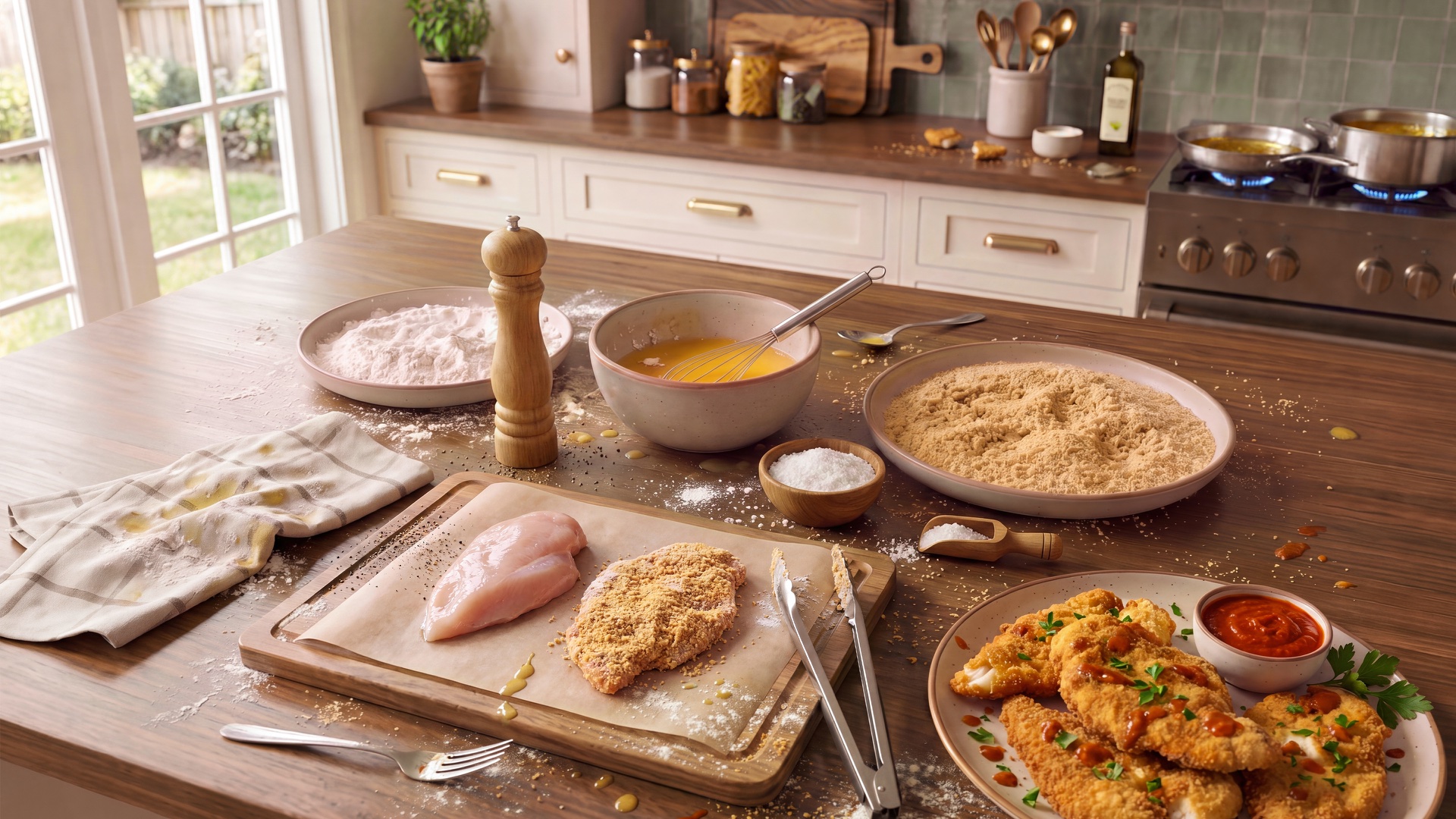
I would gather a plate or bowl for flour, another for egg and another for breadcrumbs. Then I would go back for a fork, something to hold the raw food, and somewhere to put the finished pieces. By the time I was ready to cook, I had already created a pile of dishes and a trail across the kitchen.
Sometimes I tried to simplify it. I would cover a cookie sheet with foil and arrange flour and breadcrumbs across it so I had more space and less to clean. It worked well enough for that night, but it was still a makeshift answer to the same problem.
“I wasn’t trying to invent a new way to bread food. I was trying to organize the way people already do it.”
The basic sequence already made sense: flour, then egg, then breadcrumbs. What did not make sense was rebuilding the workspace from random dishes every single time. I told my sister there should be a better way to do it.
The question became a product
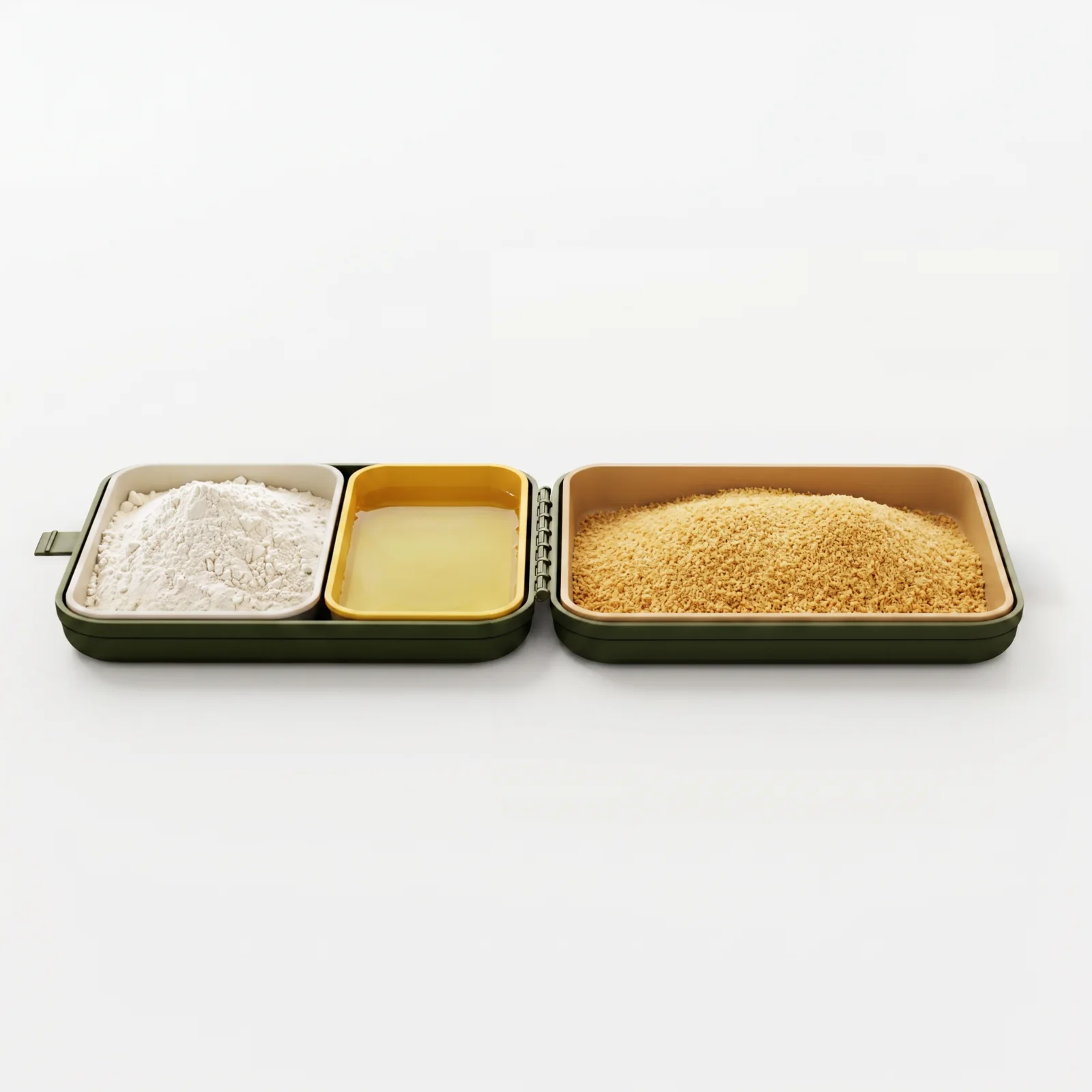
The early idea was simple: keep the three stages together, give each ingredient the right amount of room, and make the whole thing easy to put away. The flour and egg trays would sit together on one side. The larger breadcrumb tray would have more room to press and turn the food. The station would open for prep and close for storage.
That simple description turned into many decisions I did not anticipate—tray proportions, nesting, hinges, latches, materials, cleaning, color, packaging and manufacturing. Some early ideas did not work. Others looked better in a sketch than they did in CAD. That is the part of the story I want to document here.
Why I’m sharing the unfinished version
The product is still being refined. There is a real prototype, real engineering work and active manufacturer due diligence, but there are also details that still need to be confirmed before tooling and Kickstarter. I would rather show that process honestly than pretend everything arrived fully formed.
The next chapters will go back to the earliest concepts and follow how they changed into the product you see now. Some of the sketches are rough. That is exactly why they belong here.